

Where to Buy Custom Built Golf Shafts in the UK
Table of Contents
- What to Check Before You Buy Custom Built Golf Shafts
- Custom Golf Shaft Fitting: How Much Fitting You Actually Need
- Golf Shaft Flex Fitting: R, S and X Explained
- Golf Shaft Length Fitting and Swing Weight
- Golf Shaft Adapter Compatibility With Your Club Head
- What Custom Built Golf Shafts Cost and How to Compare Builds
- Conclusion
- Frequently Asked Questions
Last Updated: October 14, 2026
What to Check Before You Buy Custom Built Golf Shafts
Knowing where to buy custom built golf shafts in the in the UK is mostly a question of knowing what you are paying for. This guide from Prime Golf Shafts covers the checks that separate a properly assembled club from one that only looks the part.
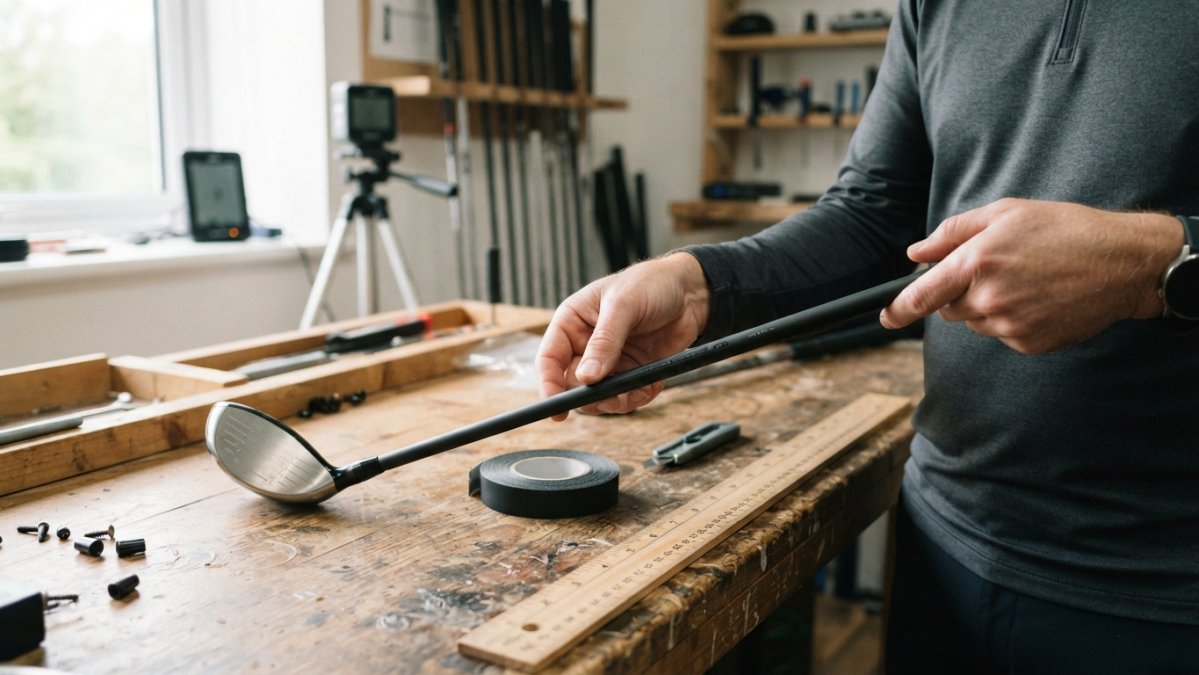
The shaft is the engine of the club, the part that loads, releases and delivers the head into the ball.
Most golfers searching for where to buy custom built golf shafts in the UK start with price. The better starting point is specification: a shaft that does not match your swing speed, tempo and release pattern will underperform no matter what it cost.
Five Checks That Separate a Good Build From a Bad One
Work through these in order. Each one rules out a category of disappointment later.
| Check | What to Confirm | Why It Matters |
|---|---|---|
| Flex match | Flex suits your swing speed and tempo | Wrong flex changes launch and dispersion |
| Length and swing weight | Built to your measured spec, not a stock number | Affects strike consistency and control |
| Adapter compatibility | Adapter matches your club head model | Prevents a shaft that cannot be fitted |
| Grip and build spec | Grip size, tape wraps and tipping confirmed | Changes feel and shot shape |
| Aftercare terms | Returns, warranty and re-spec policy in writing | Protects you if the build is wrong |
A common mistake is buying on flex label alone. Two shafts marked stiff can behave completely differently depending on profile, weight and kick point. Ask what the shaft does through impact, not just what letter is printed on it.
Custom Golf Shaft Fitting: How Much Fitting You Actually Need
Custom golf shaft fitting matches shaft weight, flex, length and profile to your swing rather than a generic standard. You do not always need a tour-level session, but you do need enough data to make one good decision.
A basic fitting suits most club golfers; a full session makes sense if you are a low handicapper chasing tighter dispersion or changing your swing under coaching. Remote fitting has made this accessible, with many fitters working from a short video and a set of numbers.
What a Fitting Session Should Measure
A session that skips these is a sales conversation, not a fitting:
- Club head speed and ball speed
- Launch angle and peak height
- Spin rate and descent angle
- Carry distance and total distance
- Dispersion pattern left to right
- Tempo and transition feel
The R&A equipment and rules guidance sets the standards clubs must meet, so any build you commission should sit within those limits. Ask your fitter how they verify that.
What most guides miss is that the numbers only matter relative to your current setup. A fitting without a baseline comparison tells you very little.
Golf Shaft Flex Fitting: R, S and X Explained
Golf shaft flex fitting matches the shaft's ability to load and release with how you deliver the club.
Regular flex (R) suits smoother tempos and moderate swing speeds, promoting a higher launch and an effortless feel.
Extra stiff (X) is built for maximum stability under load, with a firm, controlled profile that manages launch and spin.
A senior flex sits below regular for slower swing speeds, worth asking about if regular feels like hard work late in a round.
The Four Numbers Behind the Letter
Flex summarises four measurable properties. Ask about these, not just the label:
- Weight, measured in grams. A heavier shaft tends to lower launch and tighten dispersion; a lighter shaft can add speed but costs stability. Weight often matters more than flex.
- Torque, how much the shaft twists on off-centre strikes, measured in degrees. Lower torque feels firmer and more stable; higher torque feels smoother but can wander.
- Bend profile, where the shaft bends most: butt, mid or tip. A tip-stiff profile launches lower with less spin; a tip-soft profile launches higher and feels livelier.
- Kick point, the point along the shaft that releases through impact. It shapes trajectory and how the club feels at the bottom of the swing.
A shaft can be stiff in flex but light in weight and high in torque, which plays nothing like a heavy, low-torque stiff. That is why buying on flex label alone is the most common specification error.
Matching Flex to Your Swing, Not Your Ego
Swing speed sets the starting range, but tempo and release pattern decide the final choice, a fast, smooth swinger and a fast, aggressive swinger can land on different profiles at the same speed.
A practical way to check yourself: if the ball flights low and short and the club feels dead through impact, the shaft is likely too stiff. If it flights high and left and feels loose or whippy, it is likely too soft.
Prime Golf Shafts builds all three profiles around Active Taper Technology, which keeps the shaft smooth when it loads and stable when it delivers. Mark Duncombe of Custom Golfworks in Woking, who has tested the range, said: "The Quad numbers for this shaft are fantastic, if you're a strong player you'll do well to find anything to beat the X flex especially in this price range."

Golf Shaft Length Fitting and Swing Weight
Golf shaft length fitting decides how far you stand from the ball and how consistently you find the centre of the face; swing weight decides how heavy the club feels when you swing it.
Standard lengths suit an average golfer who does not exist. If you are taller, shorter, or have a steep or shallow attack angle, a made to measure length will improve strike pattern more than any shaft upgrade.
Prime Graphite Shaft | X Flex →
Golf Shaft Adapter Compatibility With Your Club Head
Golf shaft adapter compatibility determines whether a shaft will physically fit your club head and adjust as intended.
Adapters are model-specific.
Before ordering replacement shafts, confirm three things with the builder:
- The exact club head model and year
- Whether the head is adjustable or fixed
- Which adapter, if any, the build requires
Prime Golf Shafts builds each shaft to order with your choice of grip, adapter and playing length, so the specification is set before assembly rather than adapted afterwards.
Club head compatibility is also a safety point. A poorly seated adapter can work loose. Have any adapter change checked by someone who builds clubs regularly.
UK golf club safety and equipment guidance
What Custom Built Golf Shafts Cost and How to Compare Builds
Custom built golf shafts in the UK sit in a wide range, and the headline price rarely tells you what is included. What matters is the total delivered cost of a finished, fitted club, shaft, grip, adapter, labour, fitting and delivery combined.
Prime Golf Shafts sells its graphite shafts at £189.00 each, custom built to your specification. That price covers the shaft, and you choose your grip, adapter and playing length as part of the order.
What Actually Goes Into the Price of a Finished Club
A custom build is a stack of parts and labour, and every provider draws the line differently. Ask which of these are inside the quoted figure and which are added later:
- Shaft, the single biggest line, and the one most often quoted on its own
- Grip, model, size and number of tape wraps all change the cost
- Adapter or hosel sleeve, model-specific, and often billed separately on adjustable heads
- Tip trimming and preparation, cutting, sanding and prepping the tip to the correct profile
- Spining or pureing, aligning the shaft's natural bend for consistency, sometimes optional
- Assembly and epoxy, the actual build labour, frequently excluded from a parts-only quote
- Length and swing-weight adjustment, trimming and tip weighting to hit your measured spec
- Fitting session, in-person, or a remote review of your numbers
- Delivery, standard or express, and whether it is tracked
Two shafts at the same price are not the same purchase: one may include the grip, adapter, build and a trial, the other a bare shaft with everything billed on top. A shaft-only price is a starting point, not a comparison.
How to Compare Two Builds Side by Side
Work through the same questions for every provider before you decide:
| What to Compare | Question to Ask | Why It Decides Value |
|---|---|---|
| Shaft price | Is the price per shaft or per club? | Per-club pricing adds up fast across a set |
| Grip and adapter | Included or charged separately? | Extras often double the quoted figure |
| Build labour | Is assembly included? | Some quotes are parts only |
| Length and swing weight | Set to your spec at no extra cost? | Rebuilds later cost time and money |
| Tipping and alignment | Is tip trimming and spining included? | Affects feel and consistency |
| Returns | What happens if it does not suit? | Protects your outlay |
| Delivery | Standard or express, and at what cost? | Affects total landed price |
The Cost of Getting It Wrong
A cheap build that misses your spec is the most expensive option, because you pay twice: once for the club that does not work and again for the one that does. Equally, a well-specified mid-range build usually beats a premium shaft fitted to the wrong profile. Ask any provider how their returns process works on a custom-built item, because made-to-order clubs are often excluded from standard returns.
Compare the total delivered cost of a finished, fitted club, not the sticker price of a shaft. That single change in how you compare builds will save you more than any discount.
Conclusion
The hardest part of knowing where to buy custom built golf shafts in the in the UK is not finding a seller; it is knowing whether the specification in front of you suits your swing.
Prime Golf Shafts builds graphite shafts to order with your choice of grip, adapter and playing length, using Active Taper Technology across R, S and X profiles at £189.00 per shaft.
Get started with Prime Golf Shafts and build a shaft around your swing, not around a stock number.
Frequently Asked Questions
Should I get fitted before buying a golf shaft?
A fitting gives you the numbers that decide flex, length and weight, so it removes most of the guesswork. A basic session records swing speed, tempo, launch and spin, plus wrist-to-floor measurement for length. If a full fitting studio is not practical, most specialist retailers will talk through your current set, typical ball flight and misses, then recommend a starting profile. You can then fine-tune once the shaft is in play.
Can I order a custom golf shaft online?
Yes. Most specialist sellers take orders online and build to order, so you choose flex, playing length, grip and adapter during checkout. Ordering remotely works well when you already know your specifications or have fitting data to hand. Ask what happens if the first build does not feel right, and check dispatch times, since a made-to-measure shaft is assembled after purchase rather than pulled from stock.
How do I choose the right shaft flex for my swing?
Start with swing speed and how aggressively you transition. Regular flex suits smoother tempos and moderate speed, stiff flex covers faster swings that need control, and extra stiff suits high speed and hard loading. Weight, torque and kick point all shift feel and ball flight, so flex alone is not the whole answer. Testing two adjacent flexes side by side is the quickest way to settle it.
Can a golf shaft be fitted to my existing club head?
Usually yes, provided the adapter or hosel matches. Modern adjustable woods use a branded adapter, so the shaft needs the correct one for your head, while irons and wedges are fitted through the hosel. Give the seller your club head model and year so they can confirm compatibility before building. Older fixed-hosel woods are the main exception and may need a different approach.
What information do I need to order a custom golf shaft?
Have your club head model, preferred flex, playing length, grip type and adapter requirement ready, plus any fitting data such as swing speed or launch numbers. If you are unsure, describe your typical ball flight and miss instead. A seller who builds to order can translate that into a specification, and confirming each detail in writing before payment avoids a rebuild later.