

Best Driver Shaft for High Swing Speed: A 2026 Guide
Table of Contents
- What High Swing Speed Really Means for Your Driver Shaft
- Shaft Flex and the Driver Shaft Flex Chart Explained
- Driver Shaft Weight for Fast Swing Speed: Finding the Right Balance
- Torque, Kick Point and Spin: The Technical Levers That Decide Ball Flight
- Driver Shaft Fitting for Fast Swing Speed: What to Test and Why
- Best Extra Stiff Driver Shaft: What to Look For in an X Flex
- The Feel vs Data Paradox and Lessons from Other Sports
- Conclusion
- Frequently Asked Questions
Last Updated: October 19, 2026
What High Swing Speed Really Means for Your Driver Shaft
High swing speed is generally defined as a clubhead speed above 105 mph with the driver, and at that level the shaft stops being a comfort feature and becomes a control mechanism. At Prime Golf Shafts, we build every profile around one principle: the faster you swing, the less margin you have for a shaft that loads late or kicks unpredictably. Below, we break down exactly how to choose the best driver shaft for high swing speed, from flex and weight to torque and kick point.
The physics matter here. A faster swing puts more load into the shaft during transition, and that load has to release at the right moment. Get it wrong and you lose carry distance, tighten nothing, and watch dispersion widen. Get it right and the ball flight flattens into something you can repeat.
Swing Speed Categories and Where You Sit
Most fitters work from a rough four-band model. It is a starting point, not a verdict.
| Category | Driver Clubhead Speed | Typical Flex | Typical Shaft Weight |
|---|---|---|---|
| Moderate | Under 85 mph | Ladies / Senior | 45-55 g |
| Average | 85-95 mph | Regular | 55-65 g |
| Strong | 95-105 mph | Stiff | 65-75 g |
| Fast | 105 mph and above | Extra Stiff (X) | 70-85 g |
If you sit in the top band, the rest of this guide is written for you. The R&A Rules of Golf equipment standards confirm shaft and clubhead limits, but they say nothing about matching a shaft to your speed. That part is on you and your fitter.
Shaft Flex and the Driver Shaft Flex Chart Explained
Shaft flex describes how much a shaft bends under load, and the standard driver shaft flex chart runs from Ladies through Senior, Regular, Stiff and Extra Stiff. For fast swingers, flex is the first filter, not the final answer.
Here is the trap. Flex labels are not standardised across manufacturers. One brand's stiff can measure closer to another brand's X. A letter on a label tells you very little on its own, which is why serious players lean on measured data rather than the printed code.
An extra stiff profile does two jobs at high speed. It holds up under a hard transition so the clubhead does not arrive late. It also keeps the tip from adding unwanted dynamic loft at impact, which is where ballooning flights come from. If your ball climbs and stalls into the wind, flex is a reasonable first suspect.
Driver Shaft Weight for Fast Swing Speed: Finding the Right Balance
Driver shaft weight for fast swing speed usually lands between 70 g and 85 g in the X flex band, and that range exists for a reason. More mass in the shaft raises the overall heft of the club, which tends to calm a quick transition and tighten dispersion.

Lighter is not automatically faster. A 50 g shaft can add clubhead speed for a smooth swinger, but a hard-hitting player often loses control of the face with that little mass to fight against. The heavier build gives you something to swing against, and that resistance is what produces repeatable delivery.
Weight also shifts feel. Go too heavy and you may start decelerating through impact to keep the club on line, which costs ball speed. Go too light and the club can feel loose at the top. The sweet spot is the weight where your tempo settles without you thinking about it. We build our profiles so that the weight and the taper work together rather than fighting each other.
Torque, Kick Point and Spin: The Technical Levers That Decide Ball Flight
Torque, kick point and spin are the three levers a fitter moves after flex and weight are settled, and at high speed they interact rather than act independently. Understanding the mechanism behind each one is what separates a shaft that merely feels right from one that actually tightens your dispersion.
Torque measures how many degrees the shaft twists when the clubhead is off-centre, and it is usually quoted as a whole-shaft number in degrees.
Kick point describes where along the shaft the maximum bend occurs under load, and it is really a shorthand for stiffness distribution. A high kick point, stiffness concentrated toward the tip, produces a lower, flatter launch with less spin. A low kick point, stiffness concentrated toward the butt, adds dynamic loft and spin.
Spin is the outcome, not a shaft property. The shaft influences spin mainly through how much dynamic loft it delivers at impact and how consistently it returns the face to square.
Low Spin vs High Spin Profiles
Low spin profiles keep the ball down and reduce the ballooning that kills carry into wind. High spin profiles help slower swingers keep the ball airborne. If you swing above 105 mph and your drives climb steeply and drop short, you are almost certainly on too high a spin profile. The practical test is simple: compare your spin rate and peak height across two profiles at the same weight and flex, and watch which one holds its line when you miss slightly toward the heel. The lower-spin profile usually wins on dispersion even when it loses a yard or two on a centred strike.
Driver Shaft Fitting for Fast Swing Speed: What to Test and Why
Driver shaft fitting for fast swing speed should always be measured, never guessed, but the order in which you test matters as much as the data you collect. A proper session uses a launch monitor to capture clubhead speed, ball speed, launch angle, spin rate, peak height, land angle and dispersion across several candidate shafts, and it treats dispersion as the primary filter, not distance.
Prime Graphite Shaft | X Flex →
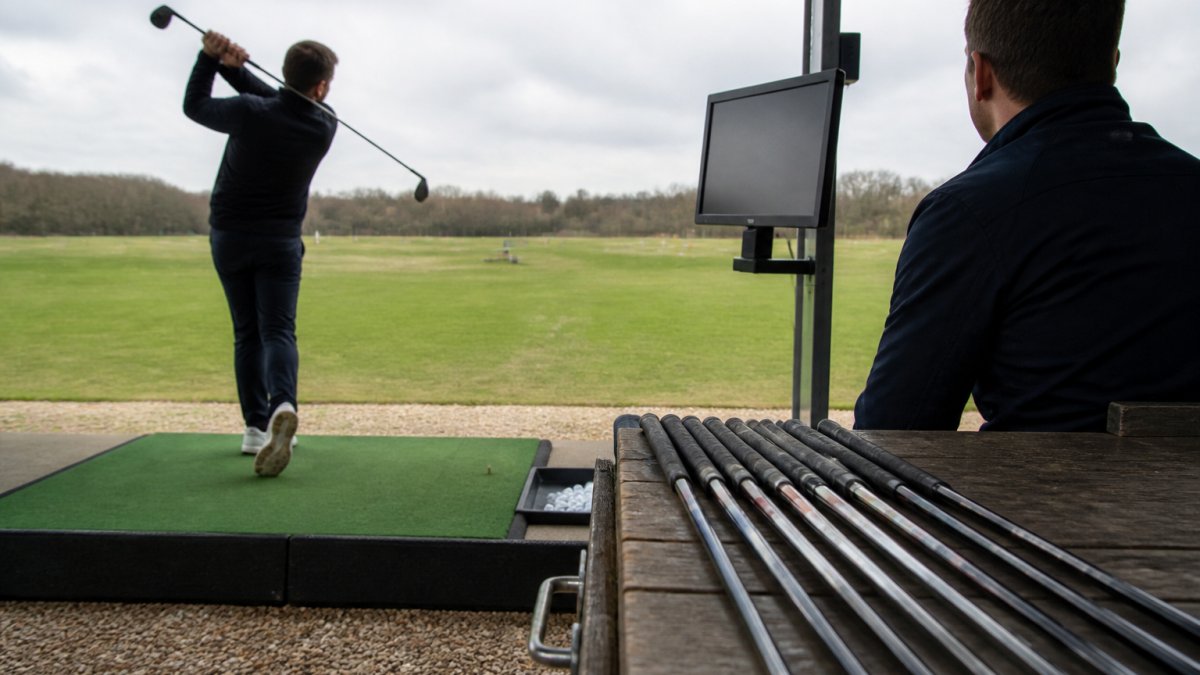
Test in this order. Confirm your speed band first. Then find the weight that settles your tempo. Then compare profiles at that weight and watch what happens to spin and dispersion, not just distance. A shaft that adds three yards but scatters the face is a downgrade. Bring your own driver head if you can, because the head-shaft pairing matters and a shaft that shines in one head can feel dead in another.
The Feel vs Data Paradox
Here is the contradiction most fitting guides skip. Launch monitor data tells you which shaft performs. Your hands tell you which shaft you trust. Fast swingers often pick the profile that feels softer, because it loads in a way their brain recognises, even when the numbers say the firmer option is tighter. The resolution is not to ignore feel but to sequence it: use data to shortlist two or three profiles, then use feel to choose between them. A shaft that measures perfectly but feels dead will usually produce a hesitant, decelerating swing within a few rounds, and that costs more than the few rpm of spin you gave up.
Lessons from Other Sports
Players arriving from baseball or cricket bring a bat-swing pattern with a late, aggressive release. That pattern usually needs a firmer tip than a golfer who grew up swinging smoothly, because the late release loads the tip harder and later. If you are making that switch, expect your first fitting to feel strange: the profile that matches your athletic pattern may feel stiffer than the one your hands prefer. Trust the dispersion data over the first impression, and give the new profile at least a full session before you judge it.
Best Extra Stiff Driver Shaft: What to Look For in an X Flex
The best extra stiff driver shaft for a fast swing is one that holds stability under a hard load while still giving you enough feel to time the release.
Our Prime Graphite Shaft in X Flex is built for exactly this brief. It uses Active Taper Technology to stay smooth when it loads and stable when it delivers, with a controlled spin profile that promotes a more penetrating flight and tighter dispersion through impact.
For players just below the top band, the Prime Graphite Shaft in S Flex offers the same taper technology with efficient energy transfer and controlled launch. Both are custom built with your choice of grip, adapter, and length, so the finished club matches your setup rather than an off-the-rack average.

Mark Duncombe of Custom Golfworks put it plainly: "The Quad numbers for this shaft are fantastic, if you're a strong player you'll do well to find anything to beat the X flex especially in this price range."
The Feel vs Data Paradox and Lessons from Other Sports
Players arriving from baseball or cricket bring a bat-swing pattern with a late, aggressive release. That pattern usually needs a firmer tip than a golfer who grew up swinging smoothly. If you are making that switch, expect your first fitting to feel strange. Trust the dispersion data over the first impression.
Conclusion
Matching a shaft to a fast swing is a measurement problem, not a shopping problem, and the wrong profile quietly costs you both distance and accuracy. We build every Prime Golf Shafts profile with Active Taper Technology, tour-informed design and custom grip, adapter and length options so the finished club fits your speed and tempo. Get started with Prime Golf Shafts and find the X flex profile that turns your speed into a repeatable, penetrating ball flight.
Frequently Asked Questions
What driver shaft flex suits a high swing speed?
Most golfers swinging the driver above 105 mph will get better results from a stiff or extra stiff driver shaft. A stiff flex suits roughly 95-105 mph, while extra stiff is aimed at 105 mph and above. That said, flex labels vary between brands, so treat any driver shaft flex chart as a starting point. Tempo and transition matter too: a fast, aggressive move into the ball can overload a shaft that measures correctly on paper, causing a soft, left-biased ball flight. Test before you commit.
Does a heavier driver shaft help with a fast swing?
It can. Heavier shafts, typically 70g and above for driver, tend to improve stability and dispersion for players with a fast transition, because the extra mass resists the clubhead twisting offline. The trade-off is that weight can cost a little clubhead speed if you cannot load it efficiently. For driver shaft weight for fast swing speed, start around 60-70g in stiff and 70g-plus in extra stiff, then check launch monitor numbers. If ball speed drops without a dispersion gain, go lighter.
How do I know if my driver shaft is too flexible?
Common signs include a ball flight that balloons or hooks under a hard swing, a feeling that the clubhead lags behind your hands, and dispersion that widens when you go after one. You may also see high spin rates and a loss of carry distance on solid strikes. A quick check is to hit ten balls at your normal speed and ten at maximum effort. If the harder swings produce a noticeably worse pattern, the shaft is likely under-stiff for your load.
How does driver shaft torque affect a fast swing?
Torque measures how much the shaft twists about its own axis. Lower torque, generally under 4 degrees, keeps the clubface more stable through impact, which suits high swing speeds and helps tighten dispersion. Higher torque adds a softer feel but can let the face rotate more at speed. Faster players usually prefer lower torque, but feel is personal. Test a low-torque shaft alongside your current one and compare shot patterns rather than relying on the number alone.
R&A equipment rules and conformance
R&A research on driving distance and equipment
The R&A golf equipment standards guidance